Click the image to continue
Leaving hospital is an important milestone, but recovery often continues for weeks or months. Rehabilitation helps people regain strength, movement and confidence after surgery, injury, stroke or a long illness. Physiotherapy is a central part of this process.
What Is Rehabilitation?
Rehabilitation is a set of treatments that help you return to everyday activities as fully as possible. It may involve physiotherapists, occupational therapists, speech therapists, nurses, dietitians and doctors working together as a team.
Who Needs It?
- People recovering from joint replacement, spine or fracture surgery.
- Stroke and other neurological conditions.
- Heart attack or heart surgery (cardiac rehabilitation).
- Lung conditions (pulmonary rehabilitation).
- Patients weakened after intensive care or long bed rest.
What Physiotherapy Involves
A physiotherapist first assesses your strength, balance, movement and pain. They then create a plan that may include:
| Treatment | Purpose |
|---|---|
| Exercises | Build strength, flexibility and endurance |
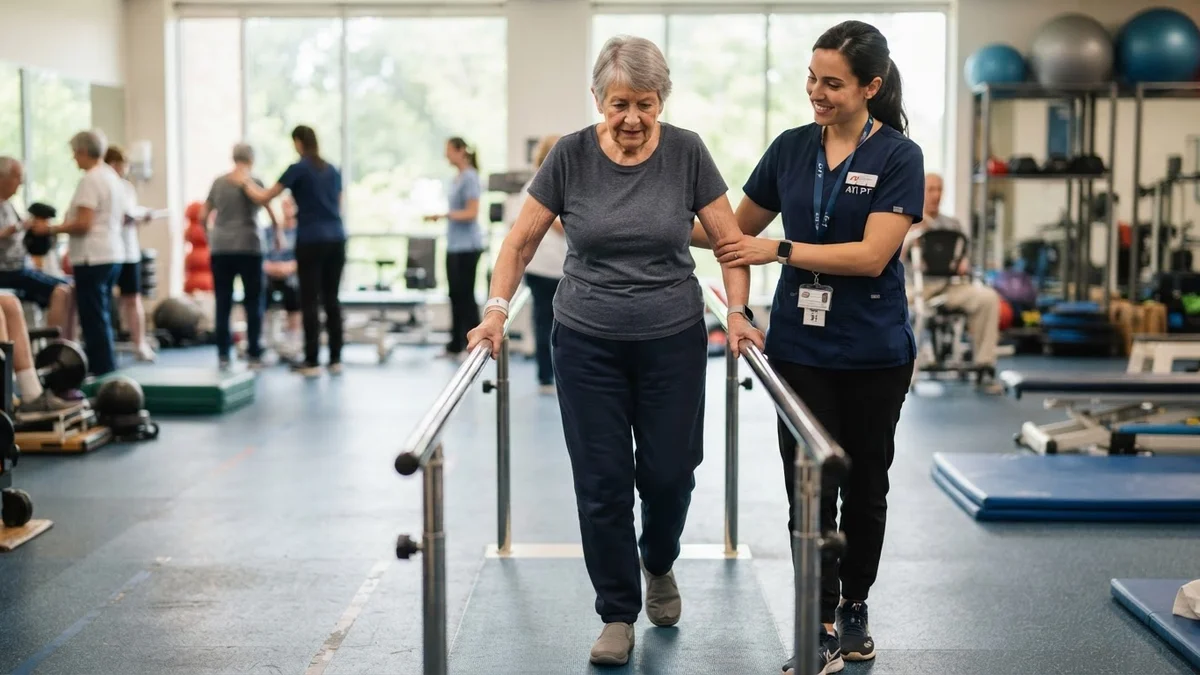
| Walking and balance training | Reduce fall risk, regain mobility |
| Breathing exercises | Improve lung function after surgery |
| Manual therapy | Ease stiffness and pain |
| Aids and equipment | Safe use of walkers, crutches or braces |
Where Rehabilitation Happens
Rehab can take place in the hospital ward, a dedicated rehabilitation centre, an outpatient clinic or at home. Some services now offer video sessions for exercise guidance. Your care team will suggest the setting that suits your condition and support at home.
Making Your Home Ready
- Clear walkways and remove loose rugs.
- Keep frequently used items within easy reach.
- Consider grab bars in the bathroom and a shower chair.
- Use good lighting, especially at night.
Tips for Better Results
- Do your home exercises regularly, even when you feel tired.
- Set small, realistic goals and track progress.
- Tell the therapist if pain is increasing rather than improving.
- Eat well and get enough sleep to support healing.
- Involve family members so they can help safely.
Emotional Recovery
Slow progress can feel frustrating. It is normal to have good and bad days. Talk to your care team if you feel low or anxious, as emotional support is part of good rehabilitation.
Conclusion
Rehabilitation turns hospital treatment into lasting recovery. With a clear plan, regular exercise and support from your team and family, many people regain much of their independence.
Disclaimer: This article is for general information only and is not a substitute for professional medical advice. Always consult a qualified healthcare provider about your own situation.